How to Bleed a Radiator (UK Step-by-Step Guide)

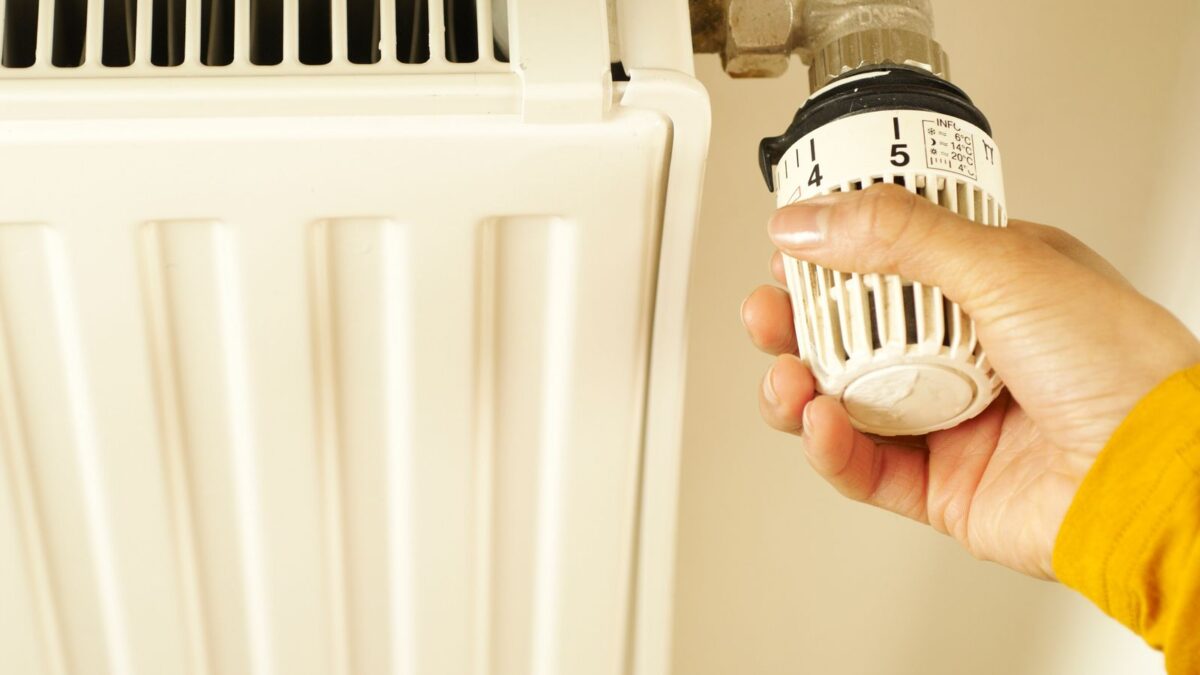
If a radiator is warm at the bottom but cold at the top, trapped air is almost always the cause. The fix — bleeding the radiator — takes about 30 minutes for a whole house, needs one cheap tool, and is a safe job for any homeowner. This guide walks you through it step by step, including the boiler-pressure check afterwards that most quick guides skip.
| Difficulty | Easy — no experience needed |
| Time | About 30 minutes for a whole house |
| Cost | A radiator key costs about £1 |
| Tools needed | Radiator key (or flathead screwdriver on some valves), old cloth, small tray or bowl |
| When to do it | When radiators are cold at the top but warm at the bottom; ideally every autumn before the heating goes on properly |
What you’ll need
- A radiator key — the small square key that fits the bleed valve. A basic brass one costs about £1 at UK hardware shops (Screwfix lists one at £0.99). Some radiators have a bleed screw with a slot that accepts a flathead screwdriver instead, so check your valve before you buy.
- An old cloth or towel — to catch drips.
- A small tray, bowl or mug — to sit under the bleed valve while you work.
That’s it. No plumber’s tools, no chemicals, no switching off the water supply.
Step-by-step
- Switch the heating off and let the radiators cool completely. Always bleed radiators with the heating off and the system cold. When the water is still, trapped air rises to the top of the radiator where you can release it — and cold radiators mean no risk of scalding. Give them at least an hour after the heating was last on.
- Find which radiators need bleeding. Any radiator that was cold at the top and warm at the bottom has trapped air. Mark them with a piece of masking tape so you don’t miss any.
- Protect the floor. Lay the cloth under the radiator and place your tray or bowl directly beneath the bleed valve — the small valve at one of the top corners of the radiator. The water that comes out can be dirty and will stain carpet or light flooring.
- Open the bleed valve slowly — a quarter turn. Fit the radiator key onto the square spindle of the bleed valve (or the screwdriver into the slot). Turn anticlockwise about a quarter turn. You will hear a hissing sound — that’s the trapped air escaping.
- Close the valve as soon as water runs steadily. Once the hiss stops and a steady trickle of water runs out (no sputtering, no air), turn the valve clockwise to close it. Don’t overtighten — snug is enough, and a snapped valve pin means a plumber’s bill. Wipe the valve dry.
- Repeat for every affected radiator. Work through all the radiators you marked in step 2.
- Switch the heating back on and re-check. Turn the heating on, let the system warm up, and check each radiator again. They should now heat evenly from bottom to top. Also turn the thermostatic valves back up on any you turned down, since low settings can mimic a bleeding problem.
After bleeding: check your boiler pressure
Bleeding releases water as well as air, so the system pressure can drop. This step is essential — skip it and the boiler may refuse to fire.
Look at the pressure gauge on the front of your boiler. When the system is cold, the needle should sit between 1 and 1.5 bar (most gauges mark this range in green). It is normal for the reading to rise towards about 2 bar once the heating is hot.
- Between 1 and 1.5 bar when cold: you’re done — nothing to do.
- Below 1 bar: top the system up using the filling loop — the small braided hose with one or two valves beneath most combi boilers. With the boiler off, open the valves slowly, watch the gauge climb to around 1.2–1.5 bar, then close the valves fully. Topping up this way is a normal homeowner job.
- Above 2.5 bar when cold: the pressure is genuinely high — check the filling loop is fully closed. If the gauge ever reaches 3 bar, a safety device (the pressure relief valve) will discharge water itself; if it keeps happening, call a heating engineer.
If your boiler shows no gauge at all, check the manual — some modern boilers display pressure on a digital screen instead.
Safety
Bleeding a radiator is a homeowner-safe job: it doesn’t involve the boiler casing, the gas supply, the flue or any sealed part of the boiler — you’re only opening a small valve on the radiator itself. Two rules keep it that way:
- Never bleed with the heating on. Hot system water can reach scalding temperatures — always work on cold radiators.
- Never open or repair anything inside the boiler. If the job goes beyond the radiator valves — fault codes, leaks inside the boiler, the pressure relief valve pipework — call a Gas Safe registered engineer. Only Gas Safe registered engineers should work on boiler components in the UK.
When to call a professional
Bleeding fixes trapped air — it doesn’t fix everything:
- Pressure keeps dropping after you top up — you likely have a leak somewhere in the system. Stop topping up repeatedly and call a heating engineer.
- Radiators are cold at the bottom but hot at the top — that’s not air; it’s usually sludge (rust and debris) sitting at the bottom. It needs a professional powerflush, not more bleeding.
- Water coming out is dark brown or black — a little discolouration is common in older systems, but heavily black water plus cold patches means sludge is building up. Mention it at your next boiler service.
- A bleed valve won’t turn, is damaged, or water sprays uncontrollably — close it gently if you can and call an engineer rather than forcing it.
Getting a room properly warm also starts with the rest of the house: bleeding radiators pairs well with draught-proofing your home — heat you keep is heat you don’t have to pay for twice.
If you’re getting the house ready for winter and worrying about bills, it’s also worth checking what support you may be entitled to — see our guide to the winter fuel payment. And if you’re planning bigger changes such as a loft conversion, ask the heating engineer to look at the whole system at the same time — it’s the cheapest moment to upgrade radiators or add thermostatic valves.
Frequently asked questions
How often should I bleed my radiators?
At least once a year — ideally in autumn before the heating season starts properly. The Energy Saving Trust suggests checking a couple of times a year, and it’s always worth a check the first time you switch the heating on after summer.
Why is only the top of my radiator cold?
Because trapped air rises. Air is lighter than water, so in a still (switched-off) system it collects at the very top of the radiator, exactly where the bleed valve is. The bottom still fills with hot water, which is why the lower half feels warm.
Should I bleed radiators with the heating on or off?
Off, and fully cooled down — always. Bleeding a hot system risks scalding from hot water, and air won’t have settled at the top while water is circulating, so the job won’t work properly.
What if the water coming out is brown or black?
A little dark water is common, especially in older systems. But if the water is very dark and radiators have cold patches low down, that’s sludge — rust and debris from inside the system — and repeated bleeding won’t fix it. Call a heating engineer; the system may need a professional powerflush.
Do I need to bleed every radiator in the house?
Only the ones with cold spots at the top. But if bleeding dropped your boiler pressure a lot, it’s worth a quick check of all of them — and always re-check the pressure gauge when you finish.
Sources
- Energy Saving Trust — cold-weather energy-saving tips (bleeding radiators; cold spots at the top): https://energysavingtrust.org.uk/cold-weather-energy-saving-your-top-tips/
- Boiler Cover UK — How to Bleed a Radiator (UK step-by-step; technique; 1–1.5 bar cold; filling loop): http://boilercoveruk.co.uk/blog/how-to-bleed-a-radiator/
- Hometree — Is Your Boiler Pressure Too High? (pressure bands explained): https://www.hometree.co.uk/blog/is-boiler-pressure-too-high/
- Go Assist — Bleed Radiator Hot or Cold (always bleed with the heating off and cold): https://www.go-assist.co.uk/blog/bleed-radiator-hot-or-cold
- Screwfix — Radiator Valve Key (£0.99 brass key): https://www.screwfix.com/p/radiator-valve-key/16909
- Citizens Advice Wiltshire — Winter heating checklist (heating off and cool; key vs screwdriver; repressurise after): https://www.cabwiltshire.citizensadvicewiltshire.org.uk/component/phocadownload/category/2-campaigning?download=78:winter-heating-checklist&Itemid=537

Ekaterina Saar is the editor of ContentOcean, covering UK entertainment, sport, money and lifestyle. She researches every article from news reports and official sources and keeps them updated as new information comes out.